Unlocking the Potential of Sarjapur Road with the Peripheral Ring Road (PRR) Development
Bangalore, often called India’s Silicon Valley, is a bustling innovation and technology hub. With its IT sector’s rapid urbanization and growth, the city has witnessed massive population influxes, creating the need for better infrastructure to manage its growth. As one of the country’s most important urban centers, it faces significant challenges related to traffic congestion and accessibility. Among the various initiatives to address these challenges, the Peripheral Ring Road (PRR) project stands out as one of the most ambitious and potentially transformative projects in Bangalore’s infrastructure landscape.
The Peripheral Ring Road is expected to provide a seamless link between some of the city’s key arterial roads, connecting crucial residential and commercial zones. One of the most prominent areas that will benefit from the PRR is Sarjapur Road, a major IT corridor with substantial real estate development in recent years. As the PRR is set to connect to Sarjapur Road, the project will profoundly impact the area’s real estate market, livability, and overall connectivity. This blog explores the intricate details of the PRR development and its implications for Sarjapur Road and Bangalore’s infrastructure and economy.
A Catalyst for Sarjapur Road’s Real Estate Boom
The Peripheral Ring Road (PRR) Project: An Overview
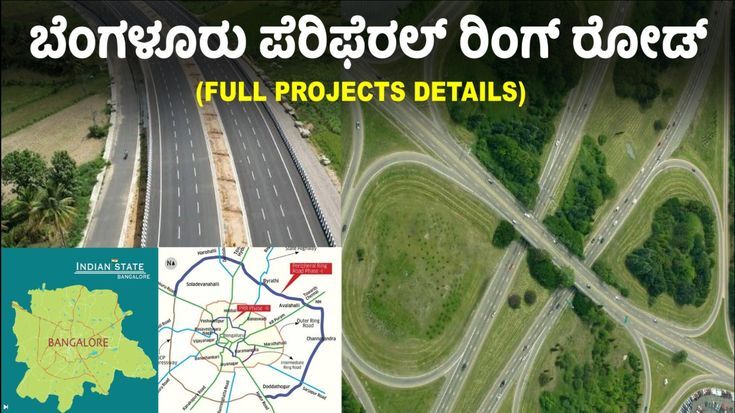
The Peripheral Ring Road is an infrastructure project to alleviate traffic congestion in Bangalore by providing an alternative route around the city. Conceived over a decade ago, the PRR is designed to be a 65-kilometer-long road that encircles the city and connects major highways, including:
- NH-4 (Tumkur Road)
- NH-7 (Bellary Road)
- Old Madras Road (NH-75)
- Hosur Road (NH-44)
- Sarjapur Road
- Whitefield
Once completed, the PRR will link these arterial roads to key industrial, residential, and commercial hubs in and around Bangalore, significantly easing traffic congestion in the city’s central parts. Additionally, the PRR is expected to connect to the Outer Ring Road (ORR), forming a crucial link between the inner city and the peripheral suburbs.
The Bangalore Development Authority (BDA) is developing the project in collaboration with the Karnataka State Government. It is part of a larger urban mobility plan to transform Bangalore into a smart city. The PRR has been delayed for years for various reasons, including land acquisition challenges and environmental clearances. However, in recent times, the project has gained momentum, and the government is keen on accelerating its completion.
Importance of the Peripheral Ring Road (PRR) for Bangalore’s Infrastructure
Supporting Peripheral Growth: The PRR is expected to drive development in the city’s outskirts by opening up new areas for residential and commercial projects. This will reduce the pressure on the central business districts (CBDs) and encourage more balanced growth across the city.
Reducing Traffic Congestion: Traffic congestion is a long-standing issue in Bangalore. The city’s infrastructure, including the Outer Ring Road (ORR), is overburdened due to rapid urban expansion. The PRR is designed to provide a much-needed bypass, diverting traffic from the city center and creating smoother transit routes for commuters traveling between different parts of the city.
Enhancing Connectivity: The PRR will establish direct connections between major highways and emerging suburbs such as Sarjapur, Whitefield, Devanahalli, and Electronic City. This will not only reduce travel times but also improve accessibility for both residents and businesses, promoting economic growth.
Boosting Real Estate: Areas along the PRR will increase property values due to improved connectivity and infrastructure. This is particularly true for areas like Sarjapur Road, which is poised to become one of the most sought-after real estate destinations in Bangalore.
 Peripheral Ring Road (PRR) and Its Impact on Sarjapur Road Growth